Why babies under one year old should never have honey (not even a drop)
Honey can carry spores of the bacterium that causes infant botulism. Which symptoms to watch for, why adults are not at the same risk and when it becomes safe.
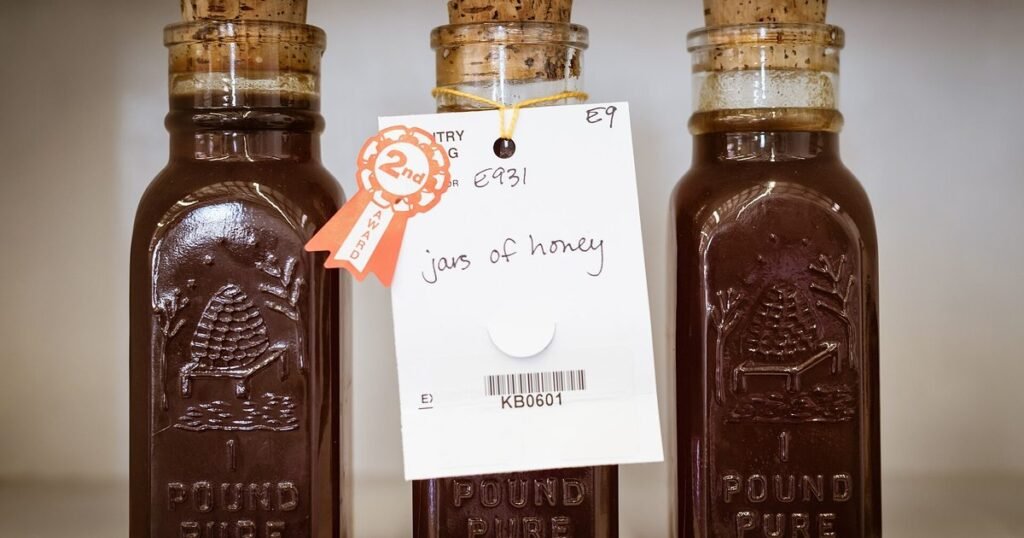
It is advice repeated in pediatric clinics around the world: no honey before the first birthday. Not in a bottle, not smeared on a pacifier to soothe the baby, not «just a little» for a cough. Many families are surprised, because honey has a reputation for being natural and healthy. The reason has a name: infant botulism.
What infant botulism is
Botulism is an illness caused by a toxin produced by the bacterium Clostridium botulinum. The toxin attacks the nerves and can cause muscle weakness and paralysis. In adults, botulism usually comes from eating improperly canned or preserved foods that already contain the toxin.
In babies the mechanism is different. The problem is not toxin that has already formed but the bacterium’s spores. Spores are tough, dormant forms, like microscopic seeds, found in soil, dust and some foods. When a baby swallows them, they can germinate in the gut, multiply and produce the toxin right there.
Why honey
Honey is one of the foods linked to infant botulism because it can contain spores of this bacterium. Not all honey does, but there is no way to tell by looking, and the spores are very heat-resistant: warming honey or baking with it does not guarantee they are destroyed. That is why agencies such as the U.S. Centers for Disease Control and Prevention (CDC) and pediatric societies recommend giving no honey in any form to babies under 12 months.
It is worth noting that honey is not the only source. Many cases of infant botulism are not tied to any food at all but to spores in dust or soil in the environment. Honey, however, is a source that is easy to avoid.
Why adults are not affected
An adult or older child can eat honey containing those same spores without trouble. The difference lies in the gut. Over time the intestine fills with a community of bacteria, the microbiota, that keeps spores from germinating and multiplying. In babies that microbiota is still developing, so spores find favorable ground. By around the first birthday the gut is usually mature enough.
For the same reason, a breastfeeding mother can safely eat honey: the spores do not pass into breast milk.
Symptoms to watch for
Infant botulism mostly affects babies under six months old, though it can occur up to one year. Symptoms tend to appear gradually:
- Constipation, often the first sign.
- A weak suck and trouble feeding.
- A weak or unusual cry.
- Drooping eyelids and a less expressive face.
- General weakness: the baby seems «floppy» and struggles to hold up their head.
- In severe cases, trouble breathing.
If a baby shows these symptoms, go to the emergency room right away. Infant botulism is a medical emergency, but with timely hospital care the vast majority of babies recover. There is a specific treatment made of antibodies against the toxin, and many infants also need support with feeding or breathing for a while.
Where honey can hide
Besides plain honey, check for:
- Pacifiers or bottle nipples dipped in honey, a habit still common in some families.
- Homemade cough or sore-throat remedies made with honey.
- Some cereals, crackers or other products that list honey as an ingredient: read the labels.
- Teas or sweetened waters made with honey that are sometimes given to babies.
What about a baby’s cough?
For children over one year, honey is sometimes used as a gentle remedy for nighttime coughs. For babies under 12 months it is not an option. If a baby has a cough, the right step is to see the pediatrician, who will look at the cause and the proper treatment. Cough syrups should not be given without medical advice either.
After the first year
After 12 months, honey can be introduced like any other food, in moderation, keeping in mind that it is a sugar. General guidelines advise limiting added sugars in children’s diets.
If relatives or caregivers help look after your baby, make sure they know the rule too. Grandparents in particular may remember a time when honey on a pacifier was common advice.
The bottom line
The rule is simple and easy to remember: no honey until the first birthday. It is a small precaution against an illness that is rare but serious. If you have questions about feeding your baby, your pediatrician is the best source of information.
Cindy Shebley / Wikimedia Commons (CC BY 2.0) · source
For information only. It does not replace advice from a health professional. Medical disclaimer
You may also like
 Family
Dos hermanas del valle del Chillón hicieron un queso de cabra y ganó oro en Uruguay frente a 400 muestras de 10 países
 Family
17 escolares de un colegio de San Juan de Miraflores ingresaron a San Marcos y cinco eligieron Nanotecnología, Geofísica e Ingeniería del Agua
 Family
Un padre camina desde Chillán hasta La Moneda por su hija de 7 años con cáncer: “Si Amandita no se rinde, nosotros tampoco”
 Family
Doña Rosario cumplió 76 años y su familia le hizo una fiesta con piñata de la Tarjeta del Bienestar: su sonrisa conquistó las redes
 Family
“Era solo un perro”: por qué perder a una mascota puede doler tanto como perder a una persona, según la ciencia
 Family