The axolotl: the Mexican amphibian that regrows legs, heart tissue and parts of its brain
It lives wild only in the canals of Xochimilco, never stops looking like a larva and can rebuild parts of its body. It is also critically endangered.
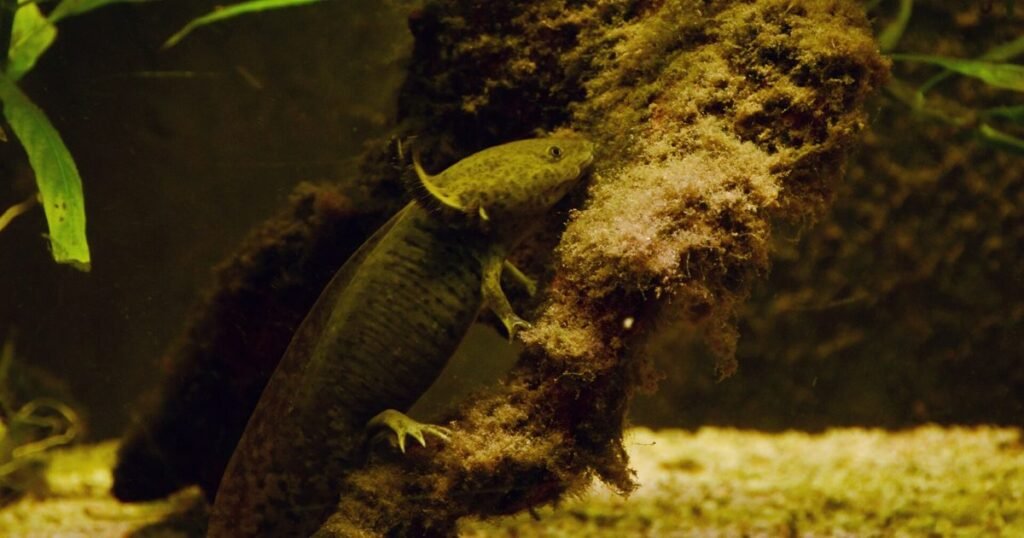
It has a permanent smile, feathery gills on both sides of its head and worldwide fame that stretches from video games to plush toys. The axolotl has become a social media star, but behind that friendly face is one of the most studied animals in modern biology, and also one of the most threatened species in Mexico.
An amphibian that never «grows up»
The axolotl (Ambystoma mexicanum) is not a fish, even though it always lives in water. It is an amphibian, a relative of salamanders. What makes it special is a phenomenon called neoteny: it reaches sexual maturity and reproduces while keeping its larval appearance. It keeps its external gills, flattened tail and aquatic life forever, whereas most salamanders go through metamorphosis and move onto land.
Under very particular conditions, for example with hormone treatments in the lab, an axolotl can be made to metamorphose, but this is rare and tends to shorten its life. In the wild it stays just as we know it.
The regeneration champion
The reason laboratories around the world breed axolotls is their astonishing ability to regenerate. If one loses a leg, a new one grows back, with bones, muscles, nerves and skin in the right places and without the scar a human would have. It can also repair its tail, parts of its spinal cord, heart tissue, parts of its eyes and some areas of its brain.
After an amputation, cells near the wound form a structure called a blastema, a kind of reservoir of cells able to rebuild what is missing. Understanding how this works could one day help improve wound healing or tissue repair in people, although scientists stress that direct medical applications are still a long way off.
Another curious fact: its genome is huge. When it was sequenced in 2018, researchers estimated around 32 billion base pairs, roughly ten times the size of the human genome. Much of that size comes from repeated sequences.
It lives in only one place on Earth
In the wild, the axolotl is endemic to the lake system of the Valley of Mexico. Today it survives almost only in the canals of Xochimilco and a few nearby areas in the south of Mexico City. Its name comes from Nahuatl and is linked to Xolotl, the Aztec god associated with fire and transformation. According to legend, Xolotl turned himself into an axolotl to escape death.
The International Union for Conservation of Nature lists the axolotl as critically endangered. Surveys by researchers at Mexico’s national university (UNAM) showed a dramatic collapse: from about 6,000 animals per square kilometer in the late 1990s to just a few dozen by the mid-2010s.
What is wiping it out
Several causes add up. Urban growth has shrunk and fragmented its habitat. The canals receive sewage and agricultural runoff. On top of that, fish such as tilapia and carp were introduced; they compete for food and eat axolotl eggs and young.
Paradoxically, axolotls are very common in aquariums and labs. The pink ones that became so popular are mostly captive-bred varieties. In the wild, axolotls are usually dark, brownish to olive green with spots, which helps them blend into the bottom of the canals.
Projects to save it
One of the best-known initiatives works with the chinamperos, farmers who grow crops on chinampas, artificial islands that date back to pre-Hispanic times. The project creates «refuges» in the canals around the plots, with natural filters that improve water quality and barriers that keep invasive fish out. In return, farmers can sell their harvest with a label recognizing axolotl-friendly practices.
The animal has also become a national symbol. Since 2021, the Bank of Mexico’s 50-peso note has featured an axolotl alongside scenes of Xochimilco, and Mexico City has museums and spaces devoted to explaining its biology and conservation.
Can you keep one at home?
In many countries it is legal to keep captive-bred axolotls, but they are not easy pets. They need cold, clean water without strong currents, proper filtration and a specific diet. Wild animals should never be captured, and aquarium axolotls should never be released into rivers or lakes, because they can spread disease or disrupt ecosystems. If you really want to help, the best option is to support conservation projects and responsible tourism in Xochimilco.
Vassil / Wikimedia Commons (CC0) · source
For information only. It does not replace advice from a health professional. Medical disclaimer
You may also like
 Animals
Cuatro víctimas entre escombros en menos de ocho minutos: Sergio y su perro Loky, el bombero y el pastor alemán que ganaron el oro europeo de rescate
 Animals
El fuego llegó a su apartamento y Molly saltó desde un quinto piso: los vecinos la esperaban abajo con una sábana
 Animals
Estaba en vivo cubriendo la inundación y vio a un perro arrastrado por la corriente: el periodista dejó el micrófono y se metió al agua
 Animals
Lo encontraron desnutrido en una cala a la que solo se llega por mar: hoy Bergantín vive en Madrid y “es el rey de la casa”
 Animals
Martín, el gallo que lleva ocho años esperando frente a un hospital oncológico tras la muerte de su dueño
 Animals