Why do cats purr? What science knows (and what it still doesn't)
Purring doesn't always mean happiness. Here is how the sound is made, why it also appears when a cat is in pain, and the trick cats use to ask for food.
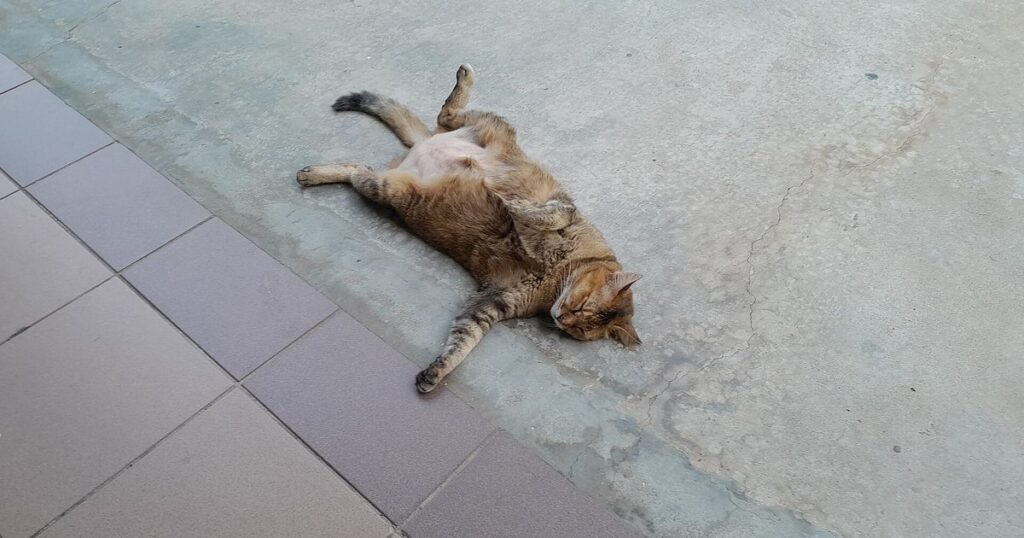
Few things are as comforting as a cat curling up on your lap and starting to purr. That low, steady hum is one of the most recognizable sounds in the animal world, and yet for decades it was also one of the most mysterious. How do cats make it? What is it for? Does it always mean the cat is happy? Science now has several answers, although some questions remain open.
How purring is produced
Purring starts in the larynx, the same organ we use to speak. For a long time the most widely accepted explanation was that the laryngeal muscles contract and relax very quickly, so the glottis (the space between the vocal folds) opens and closes dozens of times per second. Air moving through it, both when breathing in and breathing out, creates that continuous vibration. That is why a cat can purr almost without a break while it breathes.
In 2023 a team of researchers published a finding in the journal Current Biology that added nuance to that idea. Studying domestic cat larynges in the lab, they found the vocal folds could produce very low-frequency sounds like purring without rhythmic muscle signals. The key seemed to be pads of tissue embedded in the vocal folds themselves, which make them heavier and allow them to vibrate slowly. Both mechanisms probably work together, but the scientific debate continues.
The frequency of a purr usually falls roughly between 25 and 150 hertz, in the low range of human hearing. That is why we perceive it more as a vibration than as a clear tone, and why it is so noticeable when a cat is lying against us.
It is not always a sign of happiness
The usual assumption is that purring equals contentment, and often that is true: cats purr when they are relaxed, when they are being stroked or when they settle down to sleep. But vets know the other side well. Cats also purr when they are injured, ill, frightened and even while giving birth. Some cats purr in the vet’s office while clearly stressed.
That is why specialists recommend reading purring in context: body posture, ears, tail, breathing and general behavior say much more than the sound alone. A cat that purrs but hides, stops eating or breathes with difficulty needs attention, not just cuddles.
A language that starts in the litter
Kittens begin purring a few days after birth, when they still cannot see or hear well. It is thought to be a way of communicating with the mother, signaling that they are fine and nursing. The mother purrs too, which may help the kittens orient themselves toward her. That early «I’m here and all is well» function would help explain why adult cats keep using purring in very different situations, including when they feel unwell, as a way to calm themselves or ask for care.
The trick for asking for food
Anyone who lives with a cat knows there is a special purr at breakfast time. A study from the University of Sussex, published in 2009 in Current Biology, confirmed it. The researchers recorded cats purring in two situations: when they were asking for food and when they were not. Analyzing the sounds, they found the «solicitation purr» contained a high-pitched component, similar to a meow, hidden inside the low hum.
When people were asked to listen to the recordings, even those who had never owned a cat rated that purr as more urgent and less pleasant. The authors noted that the high-pitched component has a frequency similar to a human baby’s cry, something people are especially sensitive to. In other words, many cats learn to purr in a way we find very hard to ignore.
Does purring heal?
A popular claim online says purring «heals bones» because some of its frequencies overlap with those studied for stimulating bone tissue with vibration. It is an interesting hypothesis, but it has not been proven in cats or in people. The honest answer is that we do not know.
What is well documented is that the company of a pet can have positive effects on mood and feelings of loneliness. Some observational studies have found associations between owning a cat and lower cardiovascular risk, but this kind of research cannot show that the cat is the cause: people who live with animals may differ in many other ways.
Do lions purr?
Not all cats purr the same way. Domestic cats, pumas, cheetahs, lynxes and many other small and medium-sized cats can purr continuously. The big roaring cats, such as lions, tigers, leopards and jaguars, have a larynx adapted for powerful sounds and generally do not produce a continuous purr like a house cat. They do make other friendly greeting sounds, such as the soft puffing «chuff» of tigers.
How to respond to a purring cat
If your cat purrs calmly, with a relaxed body and half-closed eyes, it is most likely enjoying the moment. If it purrs but shows signs of pain or changes in its routine, see a vet. And if it purrs in that insistent tone next to an empty bowl, now you know it is no accident: it is one of the most effective communication tricks developed by a species that has lived alongside us for thousands of years.
Teojincheng / Wikimedia Commons (CC0) · source
For information only. It does not replace advice from a health professional. Medical disclaimer
You may also like
 Animals
Cuatro víctimas entre escombros en menos de ocho minutos: Sergio y su perro Loky, el bombero y el pastor alemán que ganaron el oro europeo de rescate
 Animals
El fuego llegó a su apartamento y Molly saltó desde un quinto piso: los vecinos la esperaban abajo con una sábana
 Animals
Estaba en vivo cubriendo la inundación y vio a un perro arrastrado por la corriente: el periodista dejó el micrófono y se metió al agua
 Animals
Lo encontraron desnutrido en una cala a la que solo se llega por mar: hoy Bergantín vive en Madrid y “es el rey de la casa”
 Animals
Martín, el gallo que lleva ocho años esperando frente a un hospital oncológico tras la muerte de su dueño
 Animals